WORDS: AKIHO JONES / PHOTOS: ATTANAYAKE
SUNIL PAWAR
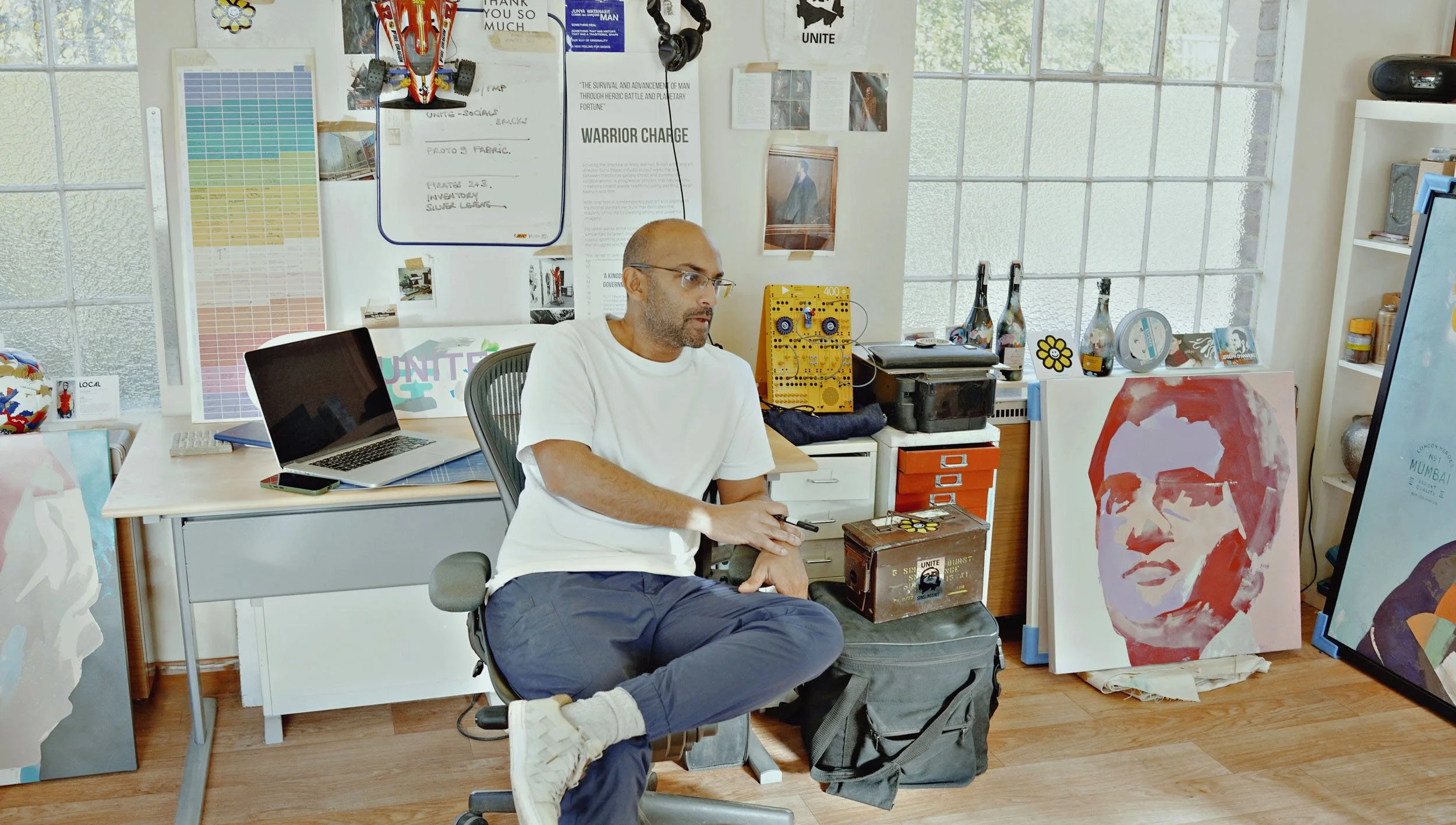
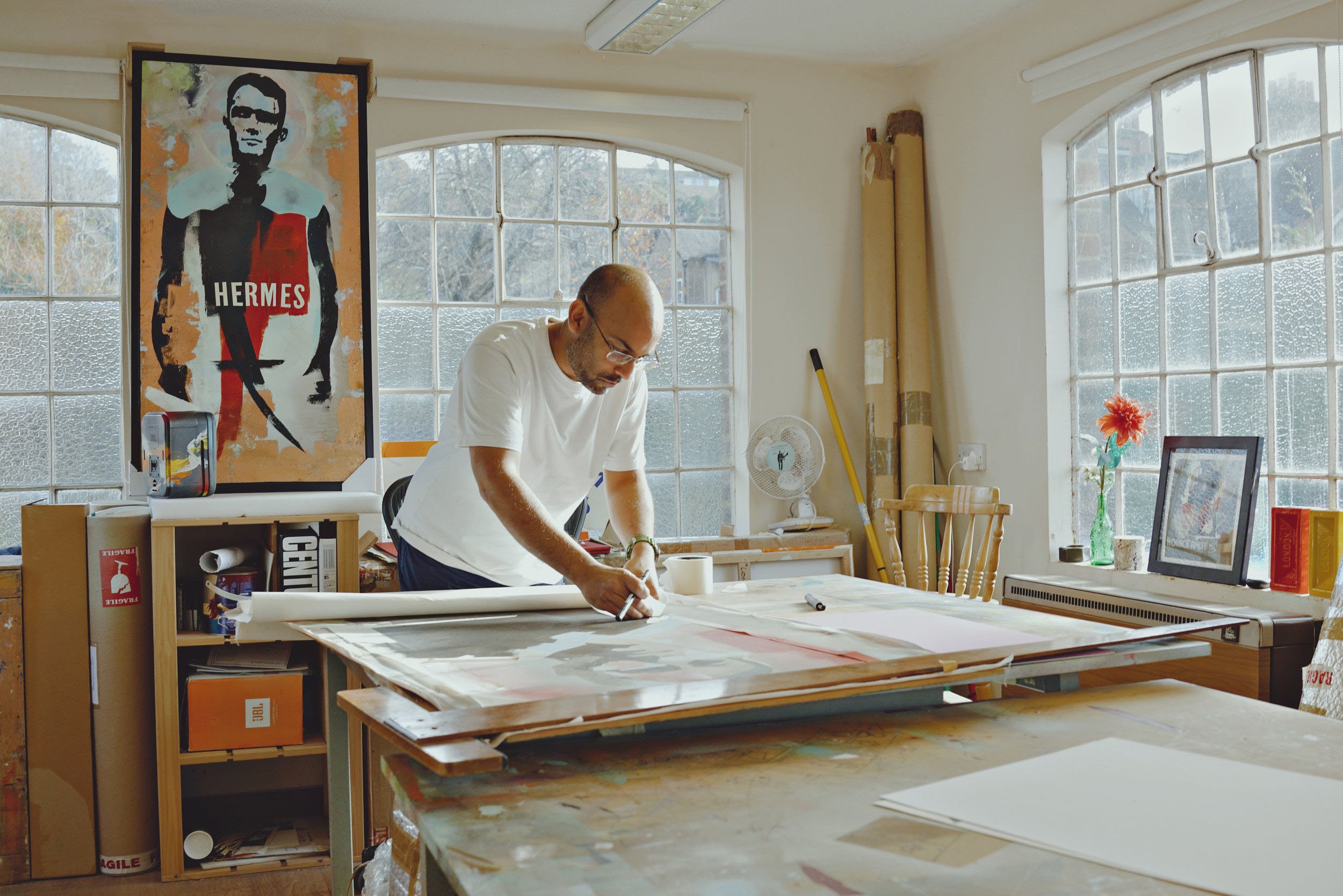
An expansive sunlight drenched top floor of an old Victorian workhouse building, complete with arched windows and raised loading bay doors, is home to the multidisciplinary studio / showroom of artist and art director Sunil Pawar. An impressive space with surfaces covered in artworks and design samples, shipping crates, prototypes and vintage electronic equipment. Sketches, test prints and flow diagrams of current projects cover the walls.
Sunil’s work first came to the fore when he was profiled in the genre defining book ‘Stencil Graffiti’ published by Thames and Hudson in the early 00’s, alongside artists including Banksy and Obey Giant. Since then, his journey in the creative world has been difficult to categorise, from an education in design and art, to a background in television commercials and DJing. Present day and his sought-after multidisciplinary output continues to push boundaries, weaving seamlessly between his traditional canvas paintings, design, illustration, fashion and future facing technology.




Can you recall the initial catalyst that persuaded you to embark on a creative journey?
I was born and raised in North West London, Whilst at school, I used to hustle by sending examples of my paintings to as many as people as possible (even sending artwork copies through fax machines) incredibly naive hustling. One of the recipients of my artwork by airmail was Keith Haring’s Pop Shop in Lafayette Street, New York, I received a reply back with postcards, a message enclosed saying they loved the work and to keep it up, (although not sure how sincere the words were :) but small factors like that gave me the confidence to persevere.
Northern Line trains uses to run past the back of our house growing up, which led to an obsession with anything design related to the London Underground, from the moquette fabrics to the graphic design of maps, so many influences.. from the Sun-Ra videos I bought from a random advert in the back of Straight no Chaser magazine, Ivan Lendl’s diamond adidas polo shirt that he wore at Wimbledon, Swatch tv adverts, Rappatack sound system recordings, ‘Flyposter Frenzy’ rush release record bags, Michiko Koshino sweats, ‘Gangster Chronicle’ by the London Posse, my Gemini DS-1224 sampler unit, all are ingredients that have flavoured the meal.
My first job was selling some of my paintings to Soul II Soul in Camden, which made me realise that I could perhaps make a career in the creative world, I went onto design record covers and club flyers for various people. It's a defining moment when you make the transition from being a subscriber of a culture to becoming an instigator, then a practitioner.

Who has had the biggest effect on your career?
After studying design and illustration, my first real experience of how creativity could fit into a more commercial framework was working for legendary ex Tony kaye film director, Patrica Murphy on TV commercials, through offices in Soho for Eight years, my time there taught me so many valuable lessons, how to balance personal creative output, experimentation and progression, whilst fulfilling briefs and keeping clients sweet at the same time, I saw the importance of adopting wide reference points, and the job introduced me to the works of Nick Knight, Anton Corbijn, Judy Blame and lots more. If you are shooting a worldwide campaign, painting a canvas, designing a brand, or even making a t shirt, whilst each have their own inherent processes, there is a commonality between creative process and journey. These magical links are invaluable to recognise. I went on to work as a ghost creative for other directors, I was dubbed the Keyser Söze of Soho, I presume that was a good thing..
I started my own practice in the late 00’s, as my own artwork was starting to take off and I was exhibiting more and more, working for directors half of the time, mainly through Los Angeles where I had representation, then the rest of the time painting and art directing, work mostly linked to fashion brands.
Unlike present day, at that point in time, the whole concept of working across differing creative practises and multiple outlets was quite rare, galleries and agencies were often quite confused by me as I was difficult to pigeon hole, which had its difficulties but also its benefits, It gave me the freedom to incorporate an element of fluidity and free nature to my process and output. You can't second guess how you are perceived from an external viewpoint, which makes having integrity in your work and yourself paramount. Everything that comes out of the studio has some semblence of an underlying narrative attached.



I first saw your work In BALS Tokyo in Ginza, your ‘DOWN BY LAW’ racing helmet, how important is working internationally to you? how has Brexit affected you?
That’s crazy you remember that, thank you. Yes, It is extremely important having adventures abroad, It’s great to see how work translates into differing territories. The internet has made the world smaller but there is no substitute for travelling and getting your feet on different soil. Brexit was devastating for so many people for so many reasons, personally the way I work and how the studio operates had to change. Sending things back and forth over the seas is still do-able but it took quite a while to get new systems in place.
Can you please walk us through your process of creating, from coming up with themes and concepts to completing the final product.
It all starts with hand sketches, I would love to say they are all done beautifully in a lovely designer notebook, but the fact is at the start it's all a bit erratic, scribbling and sketching all over the place, random bits of paper, swatches etc. everything gets collated digitally as soon as possible, working between laptop / phone and ipad. Colour references, drawings, notes all go straight up on dropbox, it means I can have an idea at 3am in the morning, which can then be referenced at the studio the next morning over a cup of tea with everything in one place.
It's a constant to-ing and fro-ing from digital and analogue, it's a process that could probably be speeded up but it works for me.
With regards to working to brief I will fight my corner if needs be, but the client is king, creative and personal integrity will always prevail, but you can't be a prima donna when food needs to be put on the table. In all these years I have never had a job go bad, a lot of that is probably due to luck and good clients, but operating as an artist working to briefs, you have to be armed with a myriad of skillsets outside of the studio, diplomacy being one of them.


I know you used to run as a sound system and are from a DJ background, how important is music to you in your work?
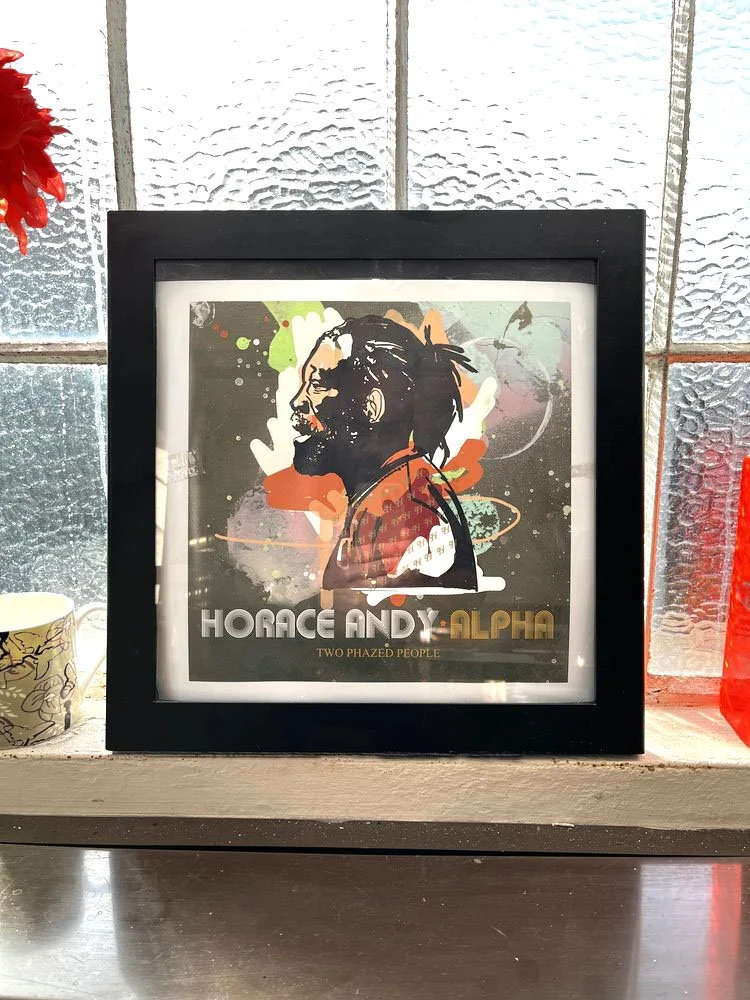
It underpins the majority of what I do. I was brought up on pirate radio, stations such as Sunrise FM, Laser FM, Dance FM, WNK, Kiss, too many to mention then onto Kool FM and Rinse. Music is the foundation of everything that comes out of the studio, I stopped playing out on a regular after lockdown, but still make tunes, they are incorporated into my work wherever possible. The first record cover I designed was for Tactica, it was for Tricky’s old record label Nyeeve Records in Bristol. The project ‘ A New Happening’ * with Gavin Watson sums up the importance of the musical element of what I do. *link


What are the downsides to working and functioning in the creative world?
Pitches and proposals fall by the wayside for a multitude of reasons, you have to trust in positive planetary forces, if things are supposed to happen they happen, if they don’t they don’t, sometimes you learn and move on, this externalisation of events aid your sanity.
To a certain extent the creative world is an unregulated industry, it certainly does have more than its fair share of egos and bullshitters, the trick is give them a healthy swerve and surround yourself with positivity wherever possible.
Last words?
Be Humble.